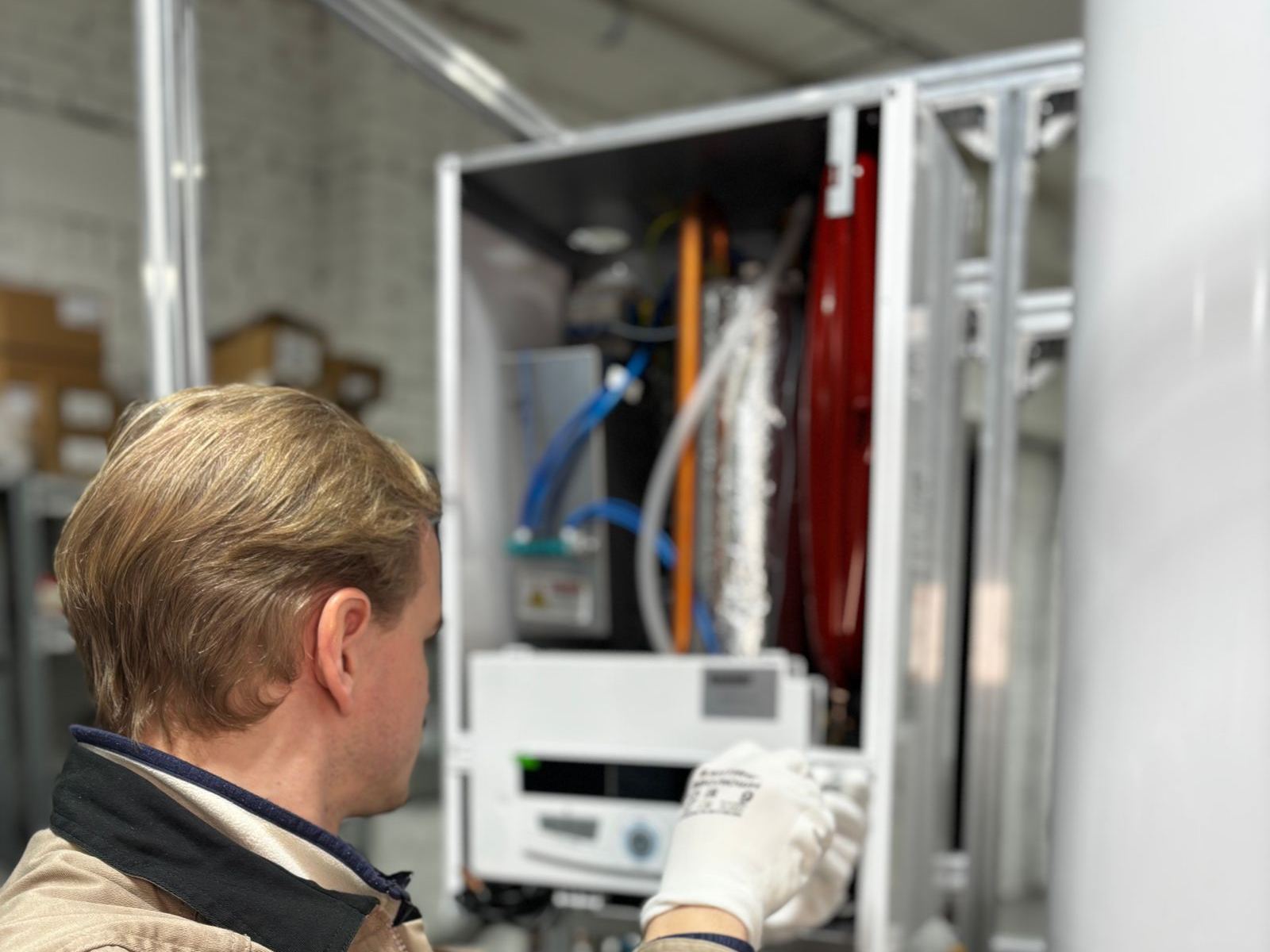
A tankless unit rethinks the whole idea of a water heater. There is no tank to keep hot, so there is no standby loss while you sleep or travel. When a faucet or shower opens, the unit senses flow and fires, heating water on demand through a heat exchanger. The result is a continuous supply as long as demand stays within the unit's capacity, a compact footprint on the wall, and a lifespan that can be nearly double that of a typical tank. Homeowners in Hickory, NC often choose tankless during a replacement or remodel for exactly those reasons.
A good tankless install starts with math, not tools. We total your peak demand in gallons per minute, such as a shower, a kitchen sink, and the dishwasher at once, and compare it against how much the unit must heat cold winter water. That tells us the real capacity you need. Next we check the supply side. Gas tankless units fire at up to around 199,000 BTU, so a half-inch line that fed an old tank is often too small. Condensing models vent through PVC or polypropylene and need a condensate drain, while non-condensing units need stainless steel venting. Electric models are their own case, often needing multiple large breakers and sometimes a service upgrade.
When we install a tankless heater, we build it to be serviced. That means isolation valves for descaling, a gas line with a sediment trap sized for the burner's full demand, venting that meets the manufacturer's rules for length and termination, and a condensate line with a neutralizer on condensing models. If you have hard water, we explain scale protection options before the unit goes on the wall. Optional recirculation can shorten the wait at distant fixtures. We handle permits where required, test the unit at full flow, and show you how it works. Homeowners in Hickory can call (828) 344-7100 for a demand assessment and a clear quote.
Most of our service calls are for Water Heater Installation in Hickory. Start there if you're not sure what you need.
When to Call for Tankless Water Heater Installation
Recognizing the warning signs early can save you money and keep a slow drip from turning into a flooded utility room. Watch for these telltale signs that professional help is needed:
- Standby losses on a tank that sits idle for long stretches
- A far-off sink or bath where a point-of-use unit could help
- Limited floor space in a closet, garage, or utility room
- A growing household or new bathroom adding hot water demand
- A tank that cannot keep up with your household's morning routine
- Renovation work that makes gas line and vent changes easier to fit in
- A tank water heater that is ten years old or more and due for replacement
- Wanting a unit that can last up to twice as long as a typical tank
Don't Wait for a Total Failure
A worn-out anode rod, a sediment-choked tank, or a weak thermocouple rarely fixes itself, and the repair usually costs more the longer it waits. At the first hint of a problem, reach out to Hickory Water Heater at (828) 344-7100 and we'll take a look.
Get Tankless Water Heater Installation Handled Today
We'll diagnose the problem and give you a straight answer on the fix.
Call (828) 344-7100 NowFrequently Asked Questions About Tankless Water Heater Installation
What a Trained Technician Brings to the Job
Could a handy homeowner install tankless? Because the risks and the details stack up quickly. Gas piping must be sized for a burner that may draw nearly 199,000 BTU, and leaks or undersized lines are both dangerous and costly. Venting has to match the unit exactly, with the right material, slope, and termination clearances, or combustion gases can end up where they do not belong. Electric models may need a panel upgrade, and warranty terms often depend on a qualified installation. Permits and inspections are common requirements as well.
Done professionally, a tankless system performs well and stays safe. We start with a real demand assessment, confirm the gas and electrical supply, and design venting that meets the manufacturer's requirements. The install includes service valves, a sediment trap, a correctly routed relief valve line, and a neutralized condensate drain where needed, followed by a full-flow test. Just as important, we tell you plainly if a tank, hybrid, or smaller point-of-use unit would serve you better. The goal is the right water heater, not just a tankless sale.
Our Tankless Water Heater Installation Process
We follow the same careful process on every water heater, whether it's a quick thermostat swap or a full tankless conversion. Here's exactly how a typical visit unfolds:
Size It Right
We count the showers, sinks, and appliances that run together, then size for the coldest groundwater of the year rather than a mild day.
Infrastructure Review
Gas line size, meter capacity, vent routing, condensate drainage, and electrical service all get checked, so there are no surprises.
Clean, Code-Minded Installation
The unit goes on the wall with service valves, a sediment trap on the gas line, correct vent pitch and termination, and a neutralized condensate line where needed.
Full-Flow Testing & Walkthrough
We fire the unit at full demand, check gas pressure under load, confirm the vent and condensate work, set the temperature, and walk you through upkeep.
Want a Professional Opinion?
Our technicians can assess your water heater and recommend the option that actually makes sense.
Get Help: (828) 344-7100Simple Ways to Extend Your Water Heater's Life
Most of the failures we see could have been delayed for years with basic upkeep. Here are our recommendations:
- Consider a water softener or scale-prevention filter if your water is hard
- Keep the air intake and vent termination clear of snow, leaves, and debris
- Descale the heat exchanger once a year, or more often with hard water
- If the unit shows a recurring code, note it and have it checked
- Set the temperature around 120F for safety and efficiency
- Check and rinse the small filter screen at the cold inlet periodically
- Protect outdoor or garage units from freezing, and keep power on during cold snaps so freeze protection works
Doing It Yourself vs. Hiring a Technician
A few tasks, like checking the temperature setting or lifting the relief valve lever to test it, are fine for homeowners, but most water heater work involves gas lines, venting, 240-volt circuits, or a tank full of scalding water, and that belongs with a professional. Here's a comparison:
| Consideration | Doing It Yourself | Professional Service |
|---|---|---|
| Capacity | Chosen by brand or price alone | Sized by GPM and winter temperature rise |
| Gas Supply | Undersized line starves the burner | Piping sized to the burner |
| Venting | Old flue reused or wrong vent material | Venting built to the manufacturer's specs |
| Electrical | Panel capacity not checked for electric units | Service upgrades flagged up front |
| Maintenance Access | No isolation valves, so descaling is a hassle | Built for easy annual service |
| Result | Performance that falls short in winter | Steady hot water at real demand |
Book a Visit Today
Don't let a failing water heater get worse. Call Hickory Water Heater now for prompt, professional service.
Get Help: (828) 344-7100Communities We Cover
Our service area reaches well past the city limits. Choose your community for local details.